At last a holiday! After three years of COVID confinement I managed to put a spoke in our long-awaited getaway by breaking a bone in my foot a month before scheduled departure.
Medical opinion was gently but firmly in favour of cancelling the whole outing, but after waiting so long and spending so much I decided to go, and promised to treat my foot as gently as possible. I would wear “the boot” at all times. Officially this is a “walking boot” but you can’t walk very far in it.
This led to my insertion into the obscure world of “special assistance”, as they call it in the airport business: arrangements for people who cannot walk, or cannot walk long distances.
It turned out, to my surprise, that there is a great deal of variation in the way this is done.
If you are leaving Hong Kong the arrangement is very simple. You are installed in a chair while the checking-in lady summons your pusher for a suitable time. Your pusher – mine was a lady – turns up with a wheelchair of the usual folding kind, and propels you the whole way to the departure gate, via immigration, security, lift to lower level and a long walk along one of those Chak Lap Kok fingers.
She deposited me in a chair next to the departure gate, and returned at boarding time to make sure I got on the plane all right. This is a splendid arrangement and I am sure a pleasant surprise for visitors from some places. On arrival it works the same way: one solo pusher wheels you from gate through customs, immigration, baggage pick-up and out to your taxi, lift or whatever.
Transiting through Frankfurt is a completely different experience. You are met by a man who takes you upstairs in the lift. There you are passed to another man, driving an electric car. He takes you to the internal train station, where another specialist gets you on and off the train.
Upon arrival you meet another specialist who will take you through immigration and pass you to someone else. It feels rather like a game of football in which you are the ball. I think there were seven passes. On the other hand I must admit that the overall result, coordinated by some distant controller over the mobile phones which everyone consulted regularly, was entirely satisfactory. I was delivered to the right place in plenty of time.
And so on to a short flight to Basel. Basel is a small local airport, whose main claim to fame is that it actually has two exits: one to France and one to Switzerland.
It does not have those tubes down which you walk from the aeroplane to the terminal. Instead there is a wheeled flight of steps which is pushed up to the exit. But I did not have to walk down them. Here we encountered for the first time the Magic Bus. This is officially a Disabled Passenger Vehicle, or commercially an Ambulift. It is basically a van like the ones airlines use to load food and luggage. Its distinguishing feature is that the whole back can be lifted up to the height of the aircraft door.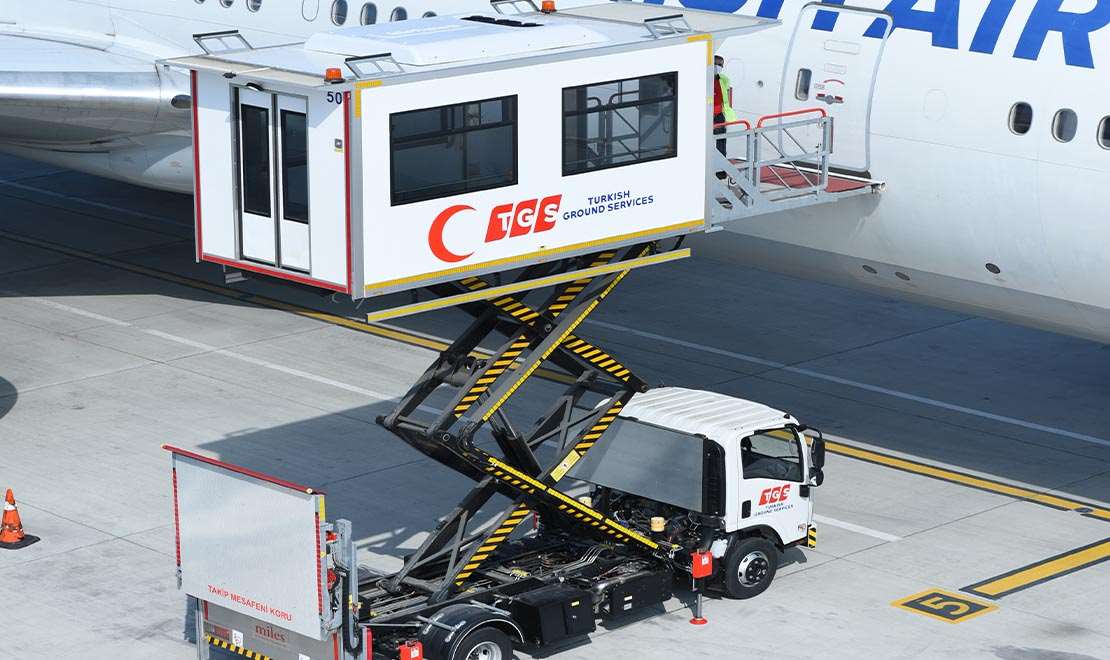
So I hobbled into the van, which then lowered itself and drove off to the terminal. There is room for three or four wheelchairs and seats for some pushers or traveling companions. We later encountered a subtly different version which is permanently in the “up” position but has a lift to move you up and down.
Next stop was the UK, where the “special assistance” work is generally farmed out to a specialist company. We went through four airports and they all seemed to be wearing the same uniform. They have their own system, in which there are gathering places called “pods”. You are moved from pod to pod, passing through the usual formalities on the way, until you reach the “departures pod” from which you are taken to your gate.
This seemed to work very well with departures. Arrivals sometimes not so good; it seemed they did not have any advance notice of the number of disabled people on the plane, so there was sometimes a shortage of pushers, or of wheelchairs.
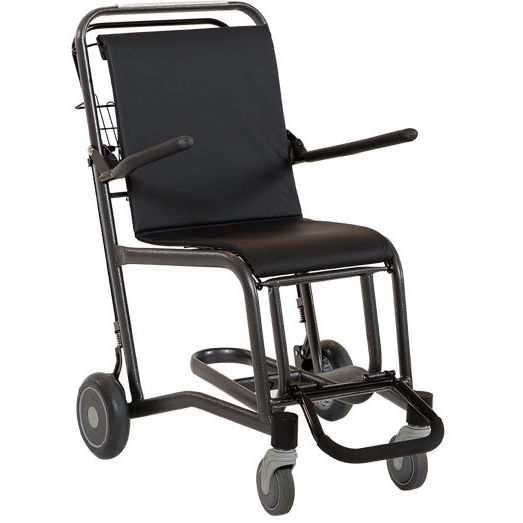
UK airports do, though, have a specially designed wheelchair for airport use. It is higher than the standard folding model and easier to get in and out of. The arrangements for the feet are simpler and there is a place for your hand luggage.
On the other hand there is no provision for the passenger to push. You are a helpless piece of baggage, as the airlines generally seem to want their passengers to be.
Still, being a helpless piece of baggage has its compensations. You miss a lot of queuing. Also you meet a lot of kind and helpful people of different nationalities. The only downer we came across was a grouchy pusher in Frankfurt on the way home. He insisted lugubriously that we would miss our flight and would have to stay two days in Frankfurt because there was no flight to Hong Kong tomorrow.
Actually we got on the flight with some time to spare. Or at least we were not the last passengers on. The grumbler’s colleagues really went the extra mile to get us home on time. One of them even turned up in security to urge the man who was frisking me to get on with it.
So on the whole an interesting experience, though if you are able-bodied I do not recommend investing in a surgical boot and a walking stick for a more restful flight experience.
My requirements were quite modest, because I could walk short distances and handle stairs. I did not need one of the special wheelchairs that can take people right to their seats on the plane, or the stair-climbing machinery they have in some places.
But however disabled you may be, if considering air travel I would like to urge you to go for it. There are a lot of people out there who are willing and eager to help you get where you want to go. The system works. Book “special assistance” in advance and enjoy.
 tim's experiment
Leave a comment